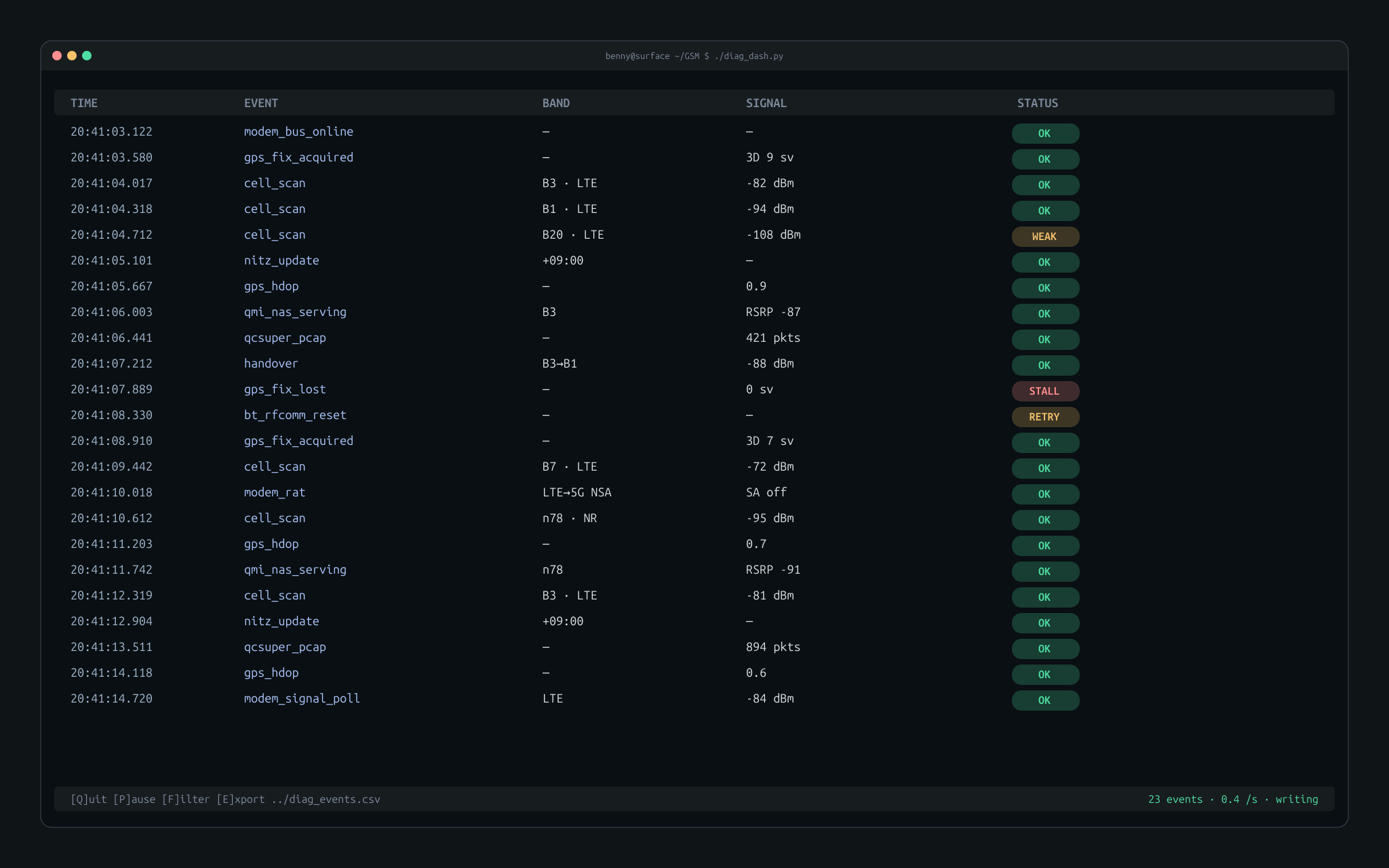
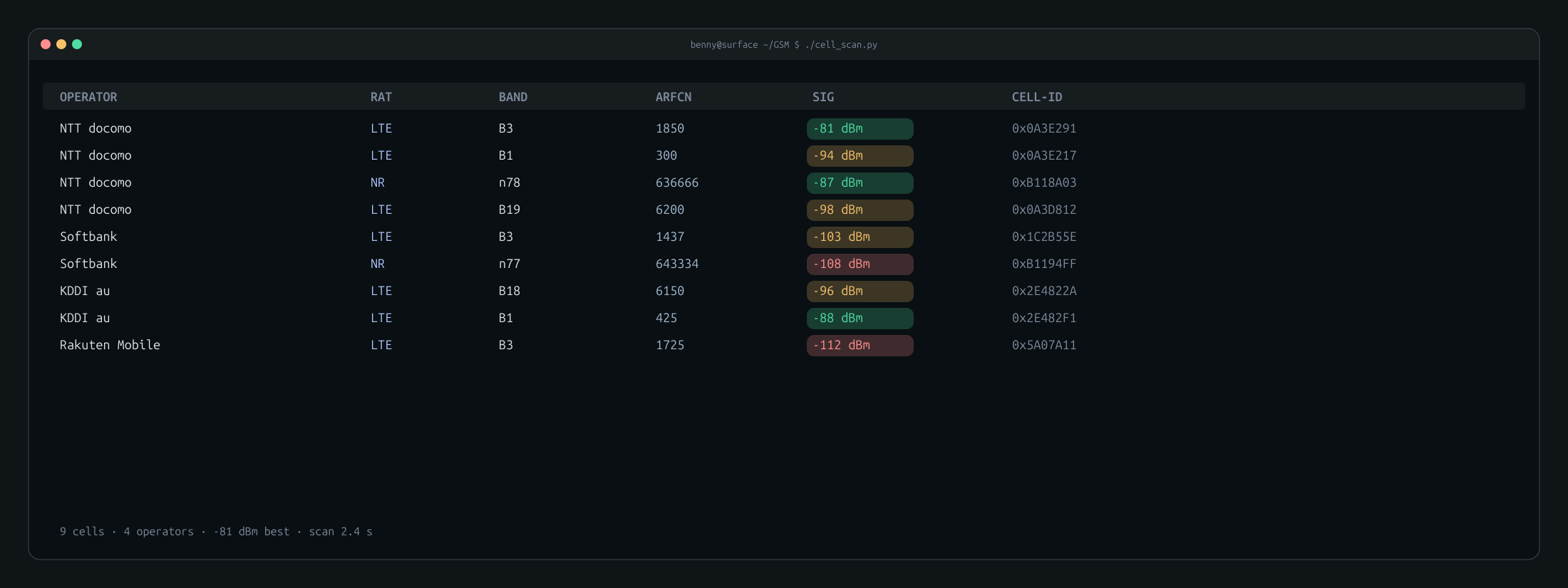
ModemManager-backed scan, dumps signal, operator, bandsqcsuper so its output streams cleanlyThe Surface Pro 9 has a cellular modem that ModemManager sees but that doesn't quite behave like a textbook 3GPP device. Some commands stall. Some diag pipes emit partial events. Some sequences crash the modem stack if you ask the wrong question during lock.
These probes exist to write down what actually happens. Before any feature is built on top of the modem, a probe confirms the behaviour on the device in front of me. That's the only way to keep the LLM honest when it's reasoning about the hardware.
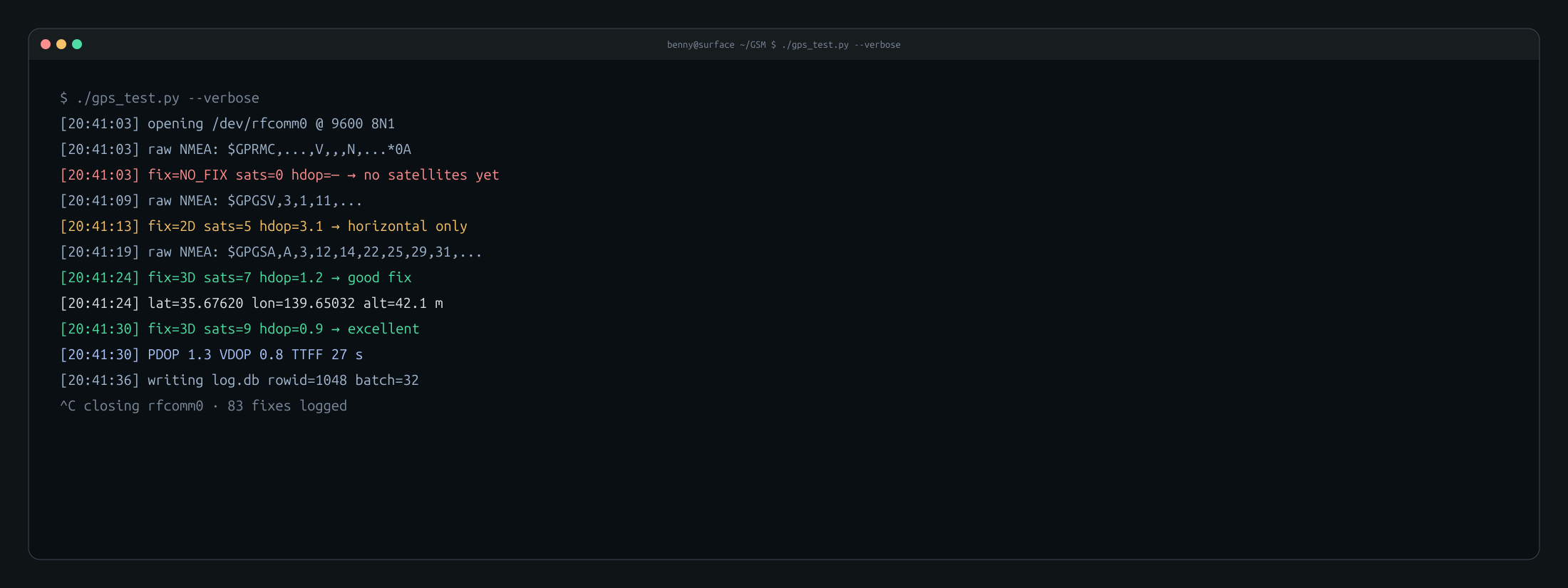
The GPS probe lineage is what made gpslog viable: by the
time the daemon was written, we already knew which gpsd
messages were garbage (status pings with mode < 2,
the pre-lock (0.0, 0.0) zero-island) and which were
real. See the MCP server page for how
that feeds the notebook's location tools.
Every hardware integration in this workspace starts with a probe. You can't design around a device you haven't interrogated. The HackRF dashboard did it with the PortaPack's ChibiOS shell. The camera did it with a libcamera rating jig. This project does it for the modem. Pattern pays off every time.